Loft Conversion
Specialists in Oxford, Oxfordshire.
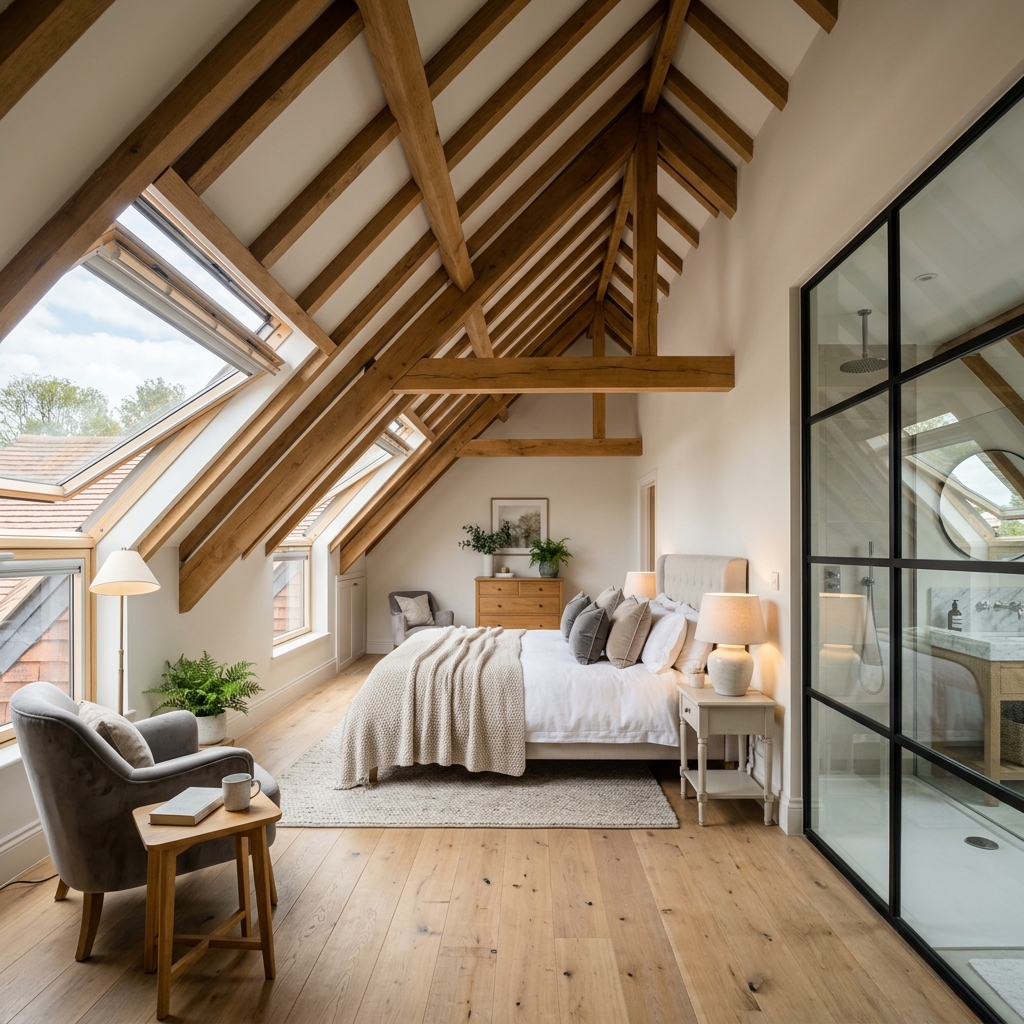
Add a room without losing your garden. Crawford Construction designs and builds loft conversions across Oxford and Oxfordshire, managing everything from architectural design to building control sign-off.
Loft Conversions
Fully licensed, insured, and custom-engineered services in Oxfordshire.
Add a room
without losing your garden.
A well-built loft conversion is one of the most cost-effective ways to add a bedroom, en-suite or home office to an Oxford home — without extending the footprint or sacrificing garden space. Crawford Construction designs and builds loft conversions across Oxford and Oxfordshire, from light-filled rooflight rooms in Victorian terraces to full mansard conversions that create a whole new floor.
As FMB-listed Oxford builders, we handle the entire project under one roof — feasibility, structural calculations, planning, the Party Wall process, building control and the build itself — with an itemised fixed-price quote and one named project manager from first visit to final handover. No juggling separate architects, surveyors and trades.
Types of loft conversion we build
Rooflight (Velux) conversion
The simplest and most affordable option, where windows sit flush in the existing roof slope and no structural roof change is needed. Ideal where you already have good head height. Usually falls under permitted development.
Dormer conversion
A box-shaped extension built out from the roof slope, adding both floor area and full head height. The most popular choice for Victorian and Edwardian terraces in areas like Headington, Cowley and Jericho — a rear dormer often sits within permitted development.
Hip-to-gable conversion
The sloping "hipped" side of the roof is rebuilt as a vertical gable wall, squaring off the loft and unlocking width. Best suited to semi-detached, detached and end-of-terrace homes, and frequently combined with a rear dormer for maximum space.
Mansard conversion
The most extensive option — the roof is largely rebuilt with a near-vertical rear wall, creating near-full head height across the whole floor. Often the right answer for period streets where other options are restricted, and capable of accommodating multiple rooms.
L-shaped dormer
A dormer to the rear and over the back addition, common on Victorian terraces, creating two distinct spaces such as a bedroom plus bathroom.
Local Project Examples
Loft Build Seal
Guaranteed Work
10-Year insurance-backed structural warranty.
How much does a loft conversion cost in Oxford?
Average guide price structures for different structural designs:
| Conversion Type | Typical Oxford Cost | Best For |
|---|---|---|
| Rooflight / Velux | from ~£15,000 | Lofts with existing head height |
| Dormer | £35,000 – £55,000 | Terraces, added head height |
| Hip-to-gable (+ dormer) | £40,000 – £65,000 | Semis & detached homes |
| Mansard | up to ~£70,000 | Maximum space, period streets |
Final cost depends on structural steelwork, staircase position, insulation, whether you're adding a bathroom, and the finish you choose. Because every roof — and every Oxford street — is different, we give a free, itemised, fixed-price quote after a site visit rather than a guess. A loft conversion can add significant value, with well-planned conversions often boosting a property's worth meaningfully.
Do I have enough head height?
This is the first thing we check. As a rule of thumb you need around 2.2m of clear height in the existing loft at the highest point, because steelwork and insulation reduce the finished ceiling height by 300–400mm.
Modern homes built with a trussed roof are trickier but not impossible — they may need the roof raised or the floor lowered, which we'll advise on honestly at the consultation. If the numbers don't work, we'll tell you before you spend anything.
Rule of Thumb Measure
Clear height is the minimum requirement measured from the top of the existing ceiling joist to the underside of the ridge board.
Planning, building regulations and party walls
Navigating local Oxfordshire council compliance and shared boundary frameworks.
Planning Permission
Many loft conversions — particularly rooflight and rear dormer designs — fall under permitted development. But if you're in an Oxford conservation area, under an Article 4 Direction, adding a front-facing dormer, or your home is a listed building, full planning permission from Oxford City Council (or the relevant district council) will usually be required. We assess this before any design work.
Building Regulations
Every loft conversion needs Building Regulations approval, regardless of whether planning permission is required. This covers structural strength, fire safety (mains-wired interlinked smoke alarms, fire doors and a protected escape route under Approved Document B), staircase design and insulation. We manage Building Control inspections in-house and hand you the completion certificate.
Party Wall etc. Act 1996
If you live in a terraced or semi-detached home and the work affects a shared wall — for example, bearing new steel beams onto it — you'll need to serve notice on your neighbours under the Party Wall Act. We guide you through this early so it never becomes a last-minute hold-up.
Loft conversions in Oxford's period homes
Oxford has a huge stock of Victorian and Edwardian terraces, and converting their lofts well takes experience. We match brickwork and roof tiles, detail dormers sympathetically to the streetscape, and work within conservation rules where they apply — so your conversion looks like it belongs, not bolted on.
Where head height or planning rules are tight, a mansard or L-shaped dormer often unlocks space that a standard dormer can't.
How we work
Consultation & feasibility
We measure head height, assess the roof structure and tell you honestly what's achievable.
Design
Architect-led drawings and the right conversion type for your home and budget.
Planning & approvals
Planning application, Building Regs and Party Wall process handled in-house.
Construction
Skilled trades, fixed price, weekly progress updates, your home kept clean and secure.
Handover
Full walkthrough, warranties, completion certificate and aftercare.
Why choose Crawford Construction
as your Oxford loft builder.
FMB-listed Oxford builder
A genuinely local, vetted FMB member — not a national chain covering Oxford from out of county.
Everything in-house
Planning, structural work, Party Wall processes, and building control inspections handled under one roof.
Fixed-price, itemised quotes
Staged payments tied strictly to construction milestones completed.
One named project manager
James Crawford, Project Director, coordinates your entire build from start to snagging.
Period-property expertise
Specialized in matching Victorian brickwork, slate tiling, and navigating conservation rules.
10-year warranty
Full comprehensive insurance-backed structural guarantees for absolute safety.
Areas we serve
Loft conversions across Oxford City Centre, Headington, Summertown, Jericho, Cowley, Iffley, North Oxford and Botley, and throughout Oxfordshire — Witney, Bicester, Abingdon, Didcot, Kidlington, Woodstock, Thame, Banbury, Carterton and the Cotswolds.
Start your Oxford loft conversion
Tell us about your project and we'll reply within 24 hours with the next steps. Free, no-obligation, and 100% confidential.
Frequently asked questions
Everything you need to know about loft conversions, staircase requirements, and planning permission.
For most Oxford homes, yes — it's one of the cheapest ways to add a bedroom or office per square metre, and it can add notable value, often more than it costs, especially when it creates an extra bedroom. The honest exceptions are lofts without enough head height, where raising the roof can tip the cost-benefit the wrong way. We'll give you a straight answer at the consultation rather than after you've committed.
Often not. Many rooflight and rear-dormer conversions fall under permitted development. But conservation areas, Article 4 Directions, front dormers and listed buildings usually trigger a full planning application. Building Regulations approval, however, is always required — there are no exceptions.
Around 2.2m clear in the existing loft is the practical minimum, because the new floor structure, steel beams and insulation eat into it — you typically lose 300–400mm. Trussed roofs (common in homes built from the 1960s on) can still be converted but may need extra structural work. We measure this first, before anything else.
It uses some space on the floor below — that's unavoidable, and a pull-down loft ladder isn't permitted for a habitable room. The skill is positioning the staircase to lose as little usable space as possible, usually over the existing stairs. We design this in from the start so there are no nasty surprises.
If you're terraced or semi-detached and the work affects a shared wall, yes — you must serve notice under the Party Wall etc. Act 1996, and a neighbour can request their own surveyor. Starting this conversation early and amicably is the single best way to avoid delays, and we guide you through it.
Older homes often have a cold-water tank up there. It can usually be removed or relocated (frequently by switching to a combi or pressurised system), but it needs planning into the design and budget. We flag it at survey stage.
Most run around 6–10 weeks on site once approvals are in place, depending on type and whether a bathroom is included. You can generally stay in the home throughout; the work is mostly contained to the roof, and we keep access and mess to a minimum.
As a rough guide: Victorian terraces suit rear or L-shaped dormers; semi-detached and detached homes suit hip-to-gable, often with a dormer; mansards give the most space where planning allows; and rooflight conversions are cheapest where you already have head height. We recommend the option that gives the best value for your specific roof — not the most expensive one.
Let's build
somethingremarkable.
From first sketch to final handover — Oxfordshire's trusted team for homes built with precision, craftsmanship and care.